


This is the second essay in a new series on Canadian Christian poets, by Burl Horniachek.
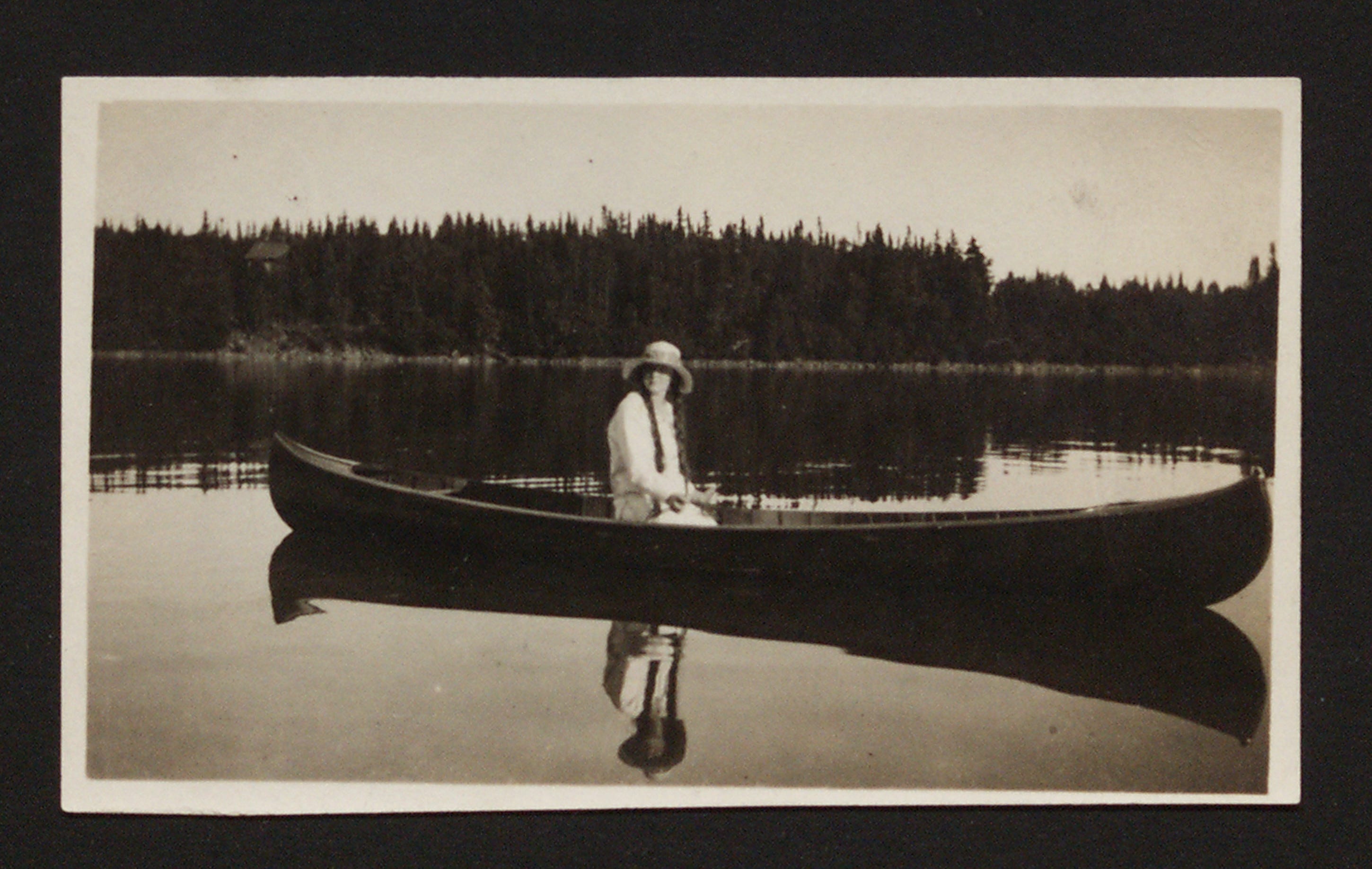
Marjorie Pickthall was the last of the Victorian poets. Victorian cultural values lasted notably longer in Canada, at least in places such as Toronto, New Westminster, and Victoria, than they did in the home country or the U.S. This was true of poetic styles as well. Pickthall herself was born in England in 1883, but moved to Canada as a child in 1890. This makes her a slightly younger contemporary of Americans like Wallace Stevens, Robert Frost, and a slightly older one of T.S. Eliot and Marianne Moore. However, while Stevens, Frost, and Eliot were heavily influenced by the Romantic and Victorian poets like Wordsworth, Keats, Shelley, Tennyson, Swinburne, and the Rossettis, they also, in various ways, very much departed from these predecessors and were clearly Post-Victorian in ways that Pickthall was not. Even older British poets, such as Kipling, Yeats, and Housman, who were born before her in the 1850s and 60s, but still writing at the same time, had also clearly moved on from the Victorians in ways she had not, even if they too kept to traditional forms. Further, the only very slightly younger Lawrence had already moved on to something extremely different. As we shall see, this does not mean that Pickthall did nothing new in her work, but her writing was obviously still in an older style.
Pickthall stated that she was most influenced by Swinburne and Dante Gabriel Rossetti, but her early work shows the influence of most of the other notable Victorian poets. Her earlier poems are reminiscent of William Morris, the early Yeats, and Patmore. This work is baroque, dreamy, bookish, indirect and verging on the decadent. It has great atmosphere, even if it lacks precision. Surprisingly, despite also being a devout Anglican, her early poetry was not particularly influenced by the other, more devout, and female, Rossetti. Pickthall would increasingly take Rossetti on as an influence in her later work, however, along with other Victorian and Romantic poets. Northrop Frye recognized a good deal of Browning in her verse drama The Woodcarver’s Wife, and Tennyson would also become an important model. Wordsworth and Shelley would become important, to go along with Blake, who was an earlier influence.
Pickthall most often writes rhymed poems in iambic pentameter or shorter lines, but she does use longer lines on occasion, usually in combination with shorter ones. All of these tend to be short lyrics rather than longer narratives. She went on to occasionally write blank verse, including in The Wood Carver’s Wife, but, though it is readable and fairly adept technically, like the rest of her unrhymed poetry, it is not especially memorable.
Critics have noted that Pickthall had a restricted and conventional early life. She was raised as an Anglican and sent to various Anglican-run schools in Toronto. She was also somewhat sickly, suffering from severe headaches, and later dental, eye, and back problems, and thus did not immediately move out into a career. She also does not seem to have seriously considered marriage. Though living in a somewhat self-enclosed world, this seems to have been at least partially self-chosen. She would write about this reluctance to go out into the world in her Rapunzel poem “The Princess in the Tower”:
I was happier up in the room
At the head of the long blue stair
Than here in the garden’s gloom
With roses to wear.
When stars my window were riming
I would lean out over the snow
And hear him climbing, climbing
A long way below.
But I was happy and lonely
As the heart of a mountain pool,
With stars and shadows only
Made beautiful.
However, though not unhappy in semi-retirement, she was neither quaint, nor mentally fragile, nor sexless. She had strong opinions about many things and her letters feature ribald humour (including panty jokes). Furthermore, despite being a devout Anglican, she had no problem appreciating the work of intensely anti-Christian writers such as Shelley and Swinburne, even incorporating their critiques into her work. She eventually began to earn some money from her writing, mainly fiction, and would later take on some librarian work at Victoria University after the death of her mother. However, she would not truly escape from her somewhat cloistered existence until WWI.
Though she is sometimes seen as appealing to middlebrow Canadian readers, even the early Pickthall is hardly an uplifting or didactic poet. She is there for the pure singing, not moralizing. In her early work, she often centres on unsteady and in-between states, as in here, at the ending to “Dawn”:
O keep the world forever at the dawn,
Yet, keeping so, let nothing lifeless seem,
But hushed, as if the miracle of morn
Were trembling in its dream.
Some shadowy moth may pass with drowsy flight
And fade before the sight,
While in the unlightened darkness of the wall
The chirping crickets call;
From forest pools where fragrant lilies are
A breath shall pass afar,
And o’er the crested pine shall hang one star.
Appropriate to this, evening and sleep are also regular themes, as in the fittingly titled “Evening”:
Lovely the day, when life is robed in splendour,
Walking the ways of God and strong with wine,
But the pale eve is wonderful and tender,
And night is more divine.
Fold my faint olives from their shimmering plain,
O Shadow of sweet darkness fringed with rain.
Give me to night again.
Give me to day no more. I have bethought me
Silence is more than laughter, sleep than tears.
Sleep like a lover faithfully hath sought me
Down the enduring years.
Where stray the first white fallings of the fold,
Where the Lent-lily droops her earlier gold
Sleep waits me as of old.
Like many of the Romantics, her focus in these early poems is on the feeling provoked by object, not the object itself. Indeed, it is often difficult to see anything distinctly at all in Pickthall’s early poetry. Partly this is due to some of the excess adjectives: “shadowy moth,” “drowsy flight,” “crested pine” etc., but it is also due to a general imprecision. What does it mean that life is “walking in the ways of God, and strong with wine”? Then the eve is “wonderful and tender,” which sounds fine, but is a little empty, verging on cliche. Still, despite all this, the poems still do work. The atmosphere may be vague, but it somehow remains coherent.
Her religious poetry as well, is hardly an uncomplicated endorsement of conventional pieties. Rather, she was more interested in the flawed and incomplete, the things out on the edge. Here, for example, is her “Imperfection”:
Not the full splendour-roll
Of music echoing where the saints have trod
Summons me, O my soul,
So quick to God,
As the weak voices with their psalm unspoken,
Lost vision, stammering prayer,
And hearts long broken
That lift from earth to heaven His mercy’s stair.
There is also in the earlier Pickthall a tension between love of earthly beauty and love of God, a sense that one could love the things of the world more than their creator, as in these stanzas from “The Bridegroom of Cana”:
Sweet, I have waked from a dream of thee,—
And of Him:
He who came when the songs were done.
From the net of thy smiles my heart went free
And the golden lure of thy love grew dim.
I turned to them asking, “Who is He,
Royal and sad, who comes to the feast
And sits Him down in the place of the least?”
And they said, “He is Jesus, the carpenter’s son.”
---
The shaft of the dawn strikes clear and sharp;
Hush, my harp.
Hush, my harp, for the day is begun,
And the lifting, shimmering flight of the swallow
Breaks in a curve on the brink of morn,
Over the sycamores, over the corn.
Cling to me, cleave to me, prison me
As the mote in the flame, as the shell in the sea,
For the winds of the dawn say, “Follow, follow
Jesus Bar-Joseph, the carpenter’s son.”
Though there was a kind of tension between art and faith here, between love of God and love of the world, Pickthall did not put High Romantic self-assertion at the centre of her poetics, and so she did not seem to feel the same tension between the supposed egotism of creation and the humility of faith. She never felt the need to try and compete with God.
This also reflects a certain indirection in early Pickthall. In her earlier work, she tends not to directly express either religious devotion or erotic desire, though she was clearly indifferent to neither. There is a sort of endless beating around the bush, but, despite that, no fear or disgust (unlike Christina Rossetti, who expressed both her attraction to and repulsion from men in much more obvious ways in Goblin Market). Pickthall is not decorous either, affecting an innocence she does not have. Perhaps, as Northrop Frye suggests, her style is just what you get when you read too much Swinburne, or even too much D.G. Rossetti.
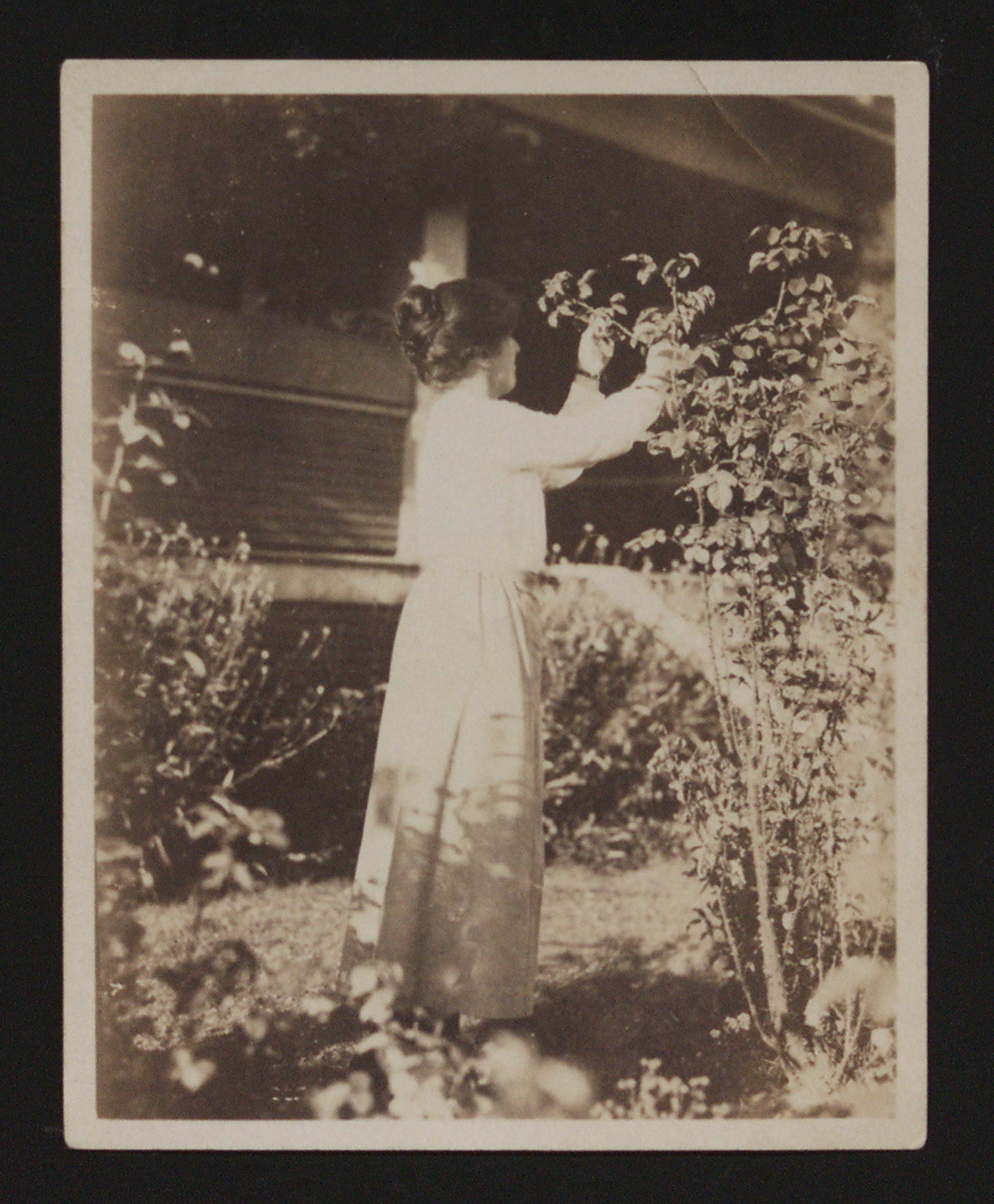
Pickthall did express her faith more directly in later poems, such as “Salutaris Hostia”:
All life’s splendour, all life’s pride,
Dust are they. I lay them down.
They were thorns that when You died
Wove for You a wounding crown.
Or “Resurgam”:
I shall say, Lord, “I have loved you, not another,
Heard in all quiet your footsteps on my road,
Felt your strong shoulder near me, O my brother,
Lightening the load.”
The more direct mode of expression in both these poems shows the increasing influence of Christina Rossetti, a poet whose influence on the earlier Pickthall was minimal. Though Christina was an intensely emotional poet, she was much less flowery and impressionistic.
Though somewhat of a miniaturist, Pickthall more than a few times moved into the prophetic. The large influence of William Blake on Canadian poetry mostly comes after Northrop Frye, but Pickthall was there first. Her most Blakean poem, “On Amaryllis,” is about a tortoise:
So dull, so slowe, so meeke I went
In my House-Roof that pay’d no Rent,
E’en my deare Mistresse guess’d no Spark
Could e’er enlight’n my dustie Dark.
    Judge not, ye Proud. Each lowlie Thing
    May lack the Voyce, not Heart, to sing.
    The Worme that from the Moulde suspires
    May be attun’d with heavenlie Quires,
    And I, a-crawling in my Straw,
    Was moved by Love, and made by Law.
It takes real vision to see heaven, not just in a wildflower, but in a land turtle. Blake had his sympathies with the lowlier creatures, but he was not one to typically see beauty in homeliness. That was all Pickthall.
Pickthall could also be somewhat frightened by the prophetic, however, as in her “The Little Sister of the Prophet”:
Will he come from the byre
With his head all misty with dreams, and his eyes on fire,
Shaking us all with the weight of the word of his passion?
I will give him raisins instead of dates,
And wreathe young leaves on the little red plates.
I will put on my new head-tyre,
And braid my hair in a comelier fashion.
Will he note? Will he mind?
Will he touch my cheek as he used to, and laugh and be kind?
She was both fascinated and wary of the ferocity that often comes with this mode, and, though she was no doubt thinking of certain Biblical prophets, Blake, in some of his fiercer moments, was no doubt on her mind as well.
Though Pickthall remained a devout Christian, she was, as mentioned before, capable of incorporating doubts and criticism into her religious work, as in “A Mother in Egypt”:
I have heard men speak in the market-place of the city,
Low voiced, in a breath,
Of a god who is stronger than ours, and who knows not changing nor pity,
Whose anger is death.
Nothing I know of the lords of the outland races,
But Amun is gentle and Hathor the Mother is mild,
And who would descend from the light of the peaceful places
To war on a child?
One might say that the gentleness of Amun and Hathor has more to do with Swinburne’s idealization of the pagan past than historical reality, but the whole poem still captures some of the unease that has been provoked by various Old Testament stories, even among the devout.
Though she never converted, Pickthall was one of those High Church Anglicans, like T.S. Eliot and others, with an intense interest in Catholicism. Her fascination with the Roman Church shows up in her several poems on North American Catholic missionaries, and in her verse drama The Wood Carver’s Wife, her tale of a French Canadian artist carving a pietà. More substantially, however, it appears in poems like “Salutaris Hostis,” her meditation on the Eucharist:
Hands of morning, take the cup
Whence the Life of Love is drained;
Hold it, raise it, lift it up
Till the lucent heavens be stained.
Joy and sorrow, lip to lip,
Lost in likeness at the end,
O my Friend,
Taste Thy wine of fellowship.
All life’s splendour, all life’s pride,
Dust are they. I lay them down.
They were thorns that when You died
Wove for You a wounding crown.
But the brier of death’s in bud,
All its loveliness he knows,
Sharon’s Rose,
That has shared Thy flesh and blood.
I suppose this might be shoehorned into some Reformed conceptions of real presence, but its bodiliness seems to fit much better with older and more visceral accounts. In any event, Pickthall does not seem to have been particularly interested in abstract theology. On another note, Pickthall here, not unsuccessfully, takes a little bit back from Shelley’s Adonais for Christianity. Life, for Pickthall, is not some monstrous companion of death, nor is it so dreadfully far away from heaven. The staining of eternity in the crucifixion is redemptive, and death and life have been intertwined and overcome by the resurrection.
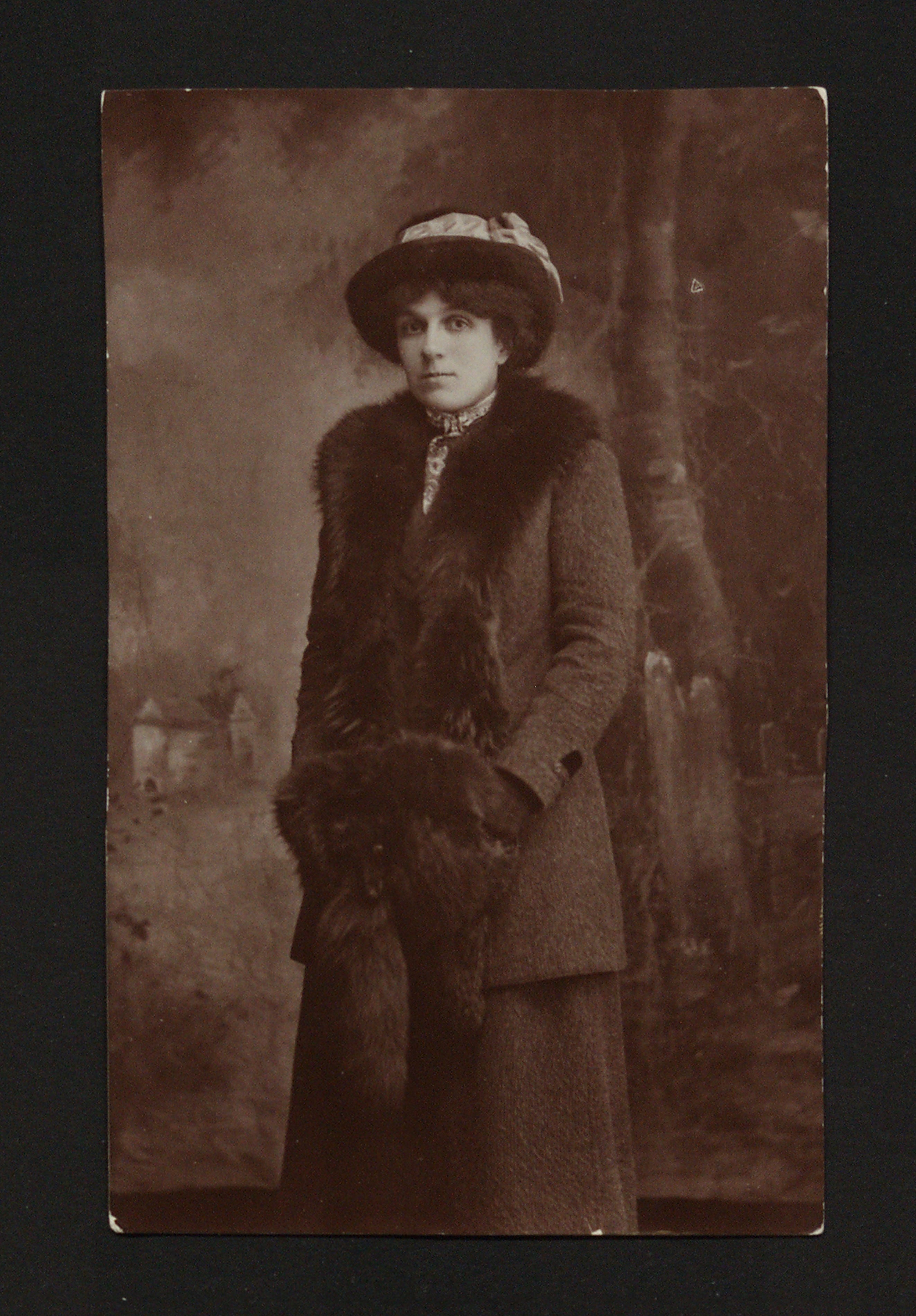
Pickthall may have been a Victorian poet, but she was a Victorian poet transported into a new world. If this did not change the style in which she wrote, it did affect her subject matter. She wrote of North American missionaries, Native American peoples, and West Coast fishermen. And, not only are the persons depicted different from the English Victorians, but the landscapes in which they are placed are both vaster and less domesticated. There are still wild places in Britain, of course, but you have to go looking for them. In Canada, on the other hand, while there are a few major cities clustered in the south with some intensely cultivated, but often surprisingly small, areas surrounding them, great masses of relatively untouched wilderness are never too far away. I have mentioned her poems on North American missionaries, and here is an excerpt from her lyric on Father Jogues, the first Catholic saint to be martyred in North America:
Like the reed-feeding swans that cannot choose
But hear the voice of summer, in swift flight
Up from Three Rivers came the long canoes
Through calm of day and night,
I in the foremost, Coupil and Couture,
Whose fiery crowns are sure.
Sweet shines the summer over Normandy,
And bright on Aries among her blossoming vines,
But O, more sweet than any land or sea
The northern summer shines.
Each night a silvered dream to cast away,
Each golden dream a day—
So we went on, and our dark Hurons smiled,
Singing the child-songs of the woodpecker,
Through clear green glooms and amber bars enisled
Of tamarack and fir.
Till one cried, “Lo, a shadow and a dread
Steals from the isles ahead!”
And her poem on Chief Peguis, one of the first converts to Christianity in Western Canada:
Just where the ridgepole cleaves the blue
A star looks down on Pegowis,
And the star and the iris sky and the dew
And the kindly trees are his.
Nothing he does but lie in the sun
And dream of the deeds he used to do,
Of the raided herd and the buffalo run
And the thundering caribou.
Pegowis thinks no more on sorrow,
Pegowis neither is glad nor grieves.
His eyes are turned to the misty morrow,
His hands are like brown leaves.
The sea, and, in particular, the waters off North America, were, from the beginning, another important subject for Pickthall, as in her “Pieter Marinus”:
But let me lie awhile in these Thy seas.
Let the soft Gulf Stream and the long South Drift,
And the swift tides that rim the Labrador,
Beat on my soul and wash it clean again.
And when Thy waves have smoothed me of my sins,
White as the sea-mew or the wind-spun foam,
Clean as the clear-cut images of stars
That swing between the swells,—then, then, O Lord,
Lean out, lean out from heaven and call me thus,
“Come up, thou soul of Pieter Marinus,”
And I’ll go home.
Though beautiful, this is much more vague and general than her later sea poetry, unsurprisingly for a Toronto-raised poet who was taking things mostly out of Swinburne rather than direct experience. At the end of her life, Pickthall moved to the West Coast, often venturing quite far out along the coasts and away from cities like Vancouver and Victoria. Her poem on the graves of fisherman, “Ebb Tide,” is set in Clo-oose, a small village on the west coast of Vancouver Island, which she had visited:
Here he may lie at ease and wonder
Why the old ship waits,
And hark for the surge and the strong thunder
Of the full Straits,
And look for the fishing fleet at morning,
Shadows like lost souls,
Slide through the fog where the seal’s warning
Betrays the shoals,
And watch for the deep-sea liner climbing
Out of the bright West,
With a salmon-sky and her wake shining
Like a tern’s breast,—
Though Pickthall was unquestionably a North American poet, she did not take much from American poetry. The United States has its own vast wildernesses, but, while there is certainly overlap with the subject matter of an American poet like Longfellow, with his Hiawathas and Evangelines, she doesn’t seem to have paid much attention to him. Furthermore, while she wrote one verse drama, she never attempted any longer poems in the mode of Longfellow or Whittier. The one American poet she does seem to have taken an interest in was the proto-decadent Poe.
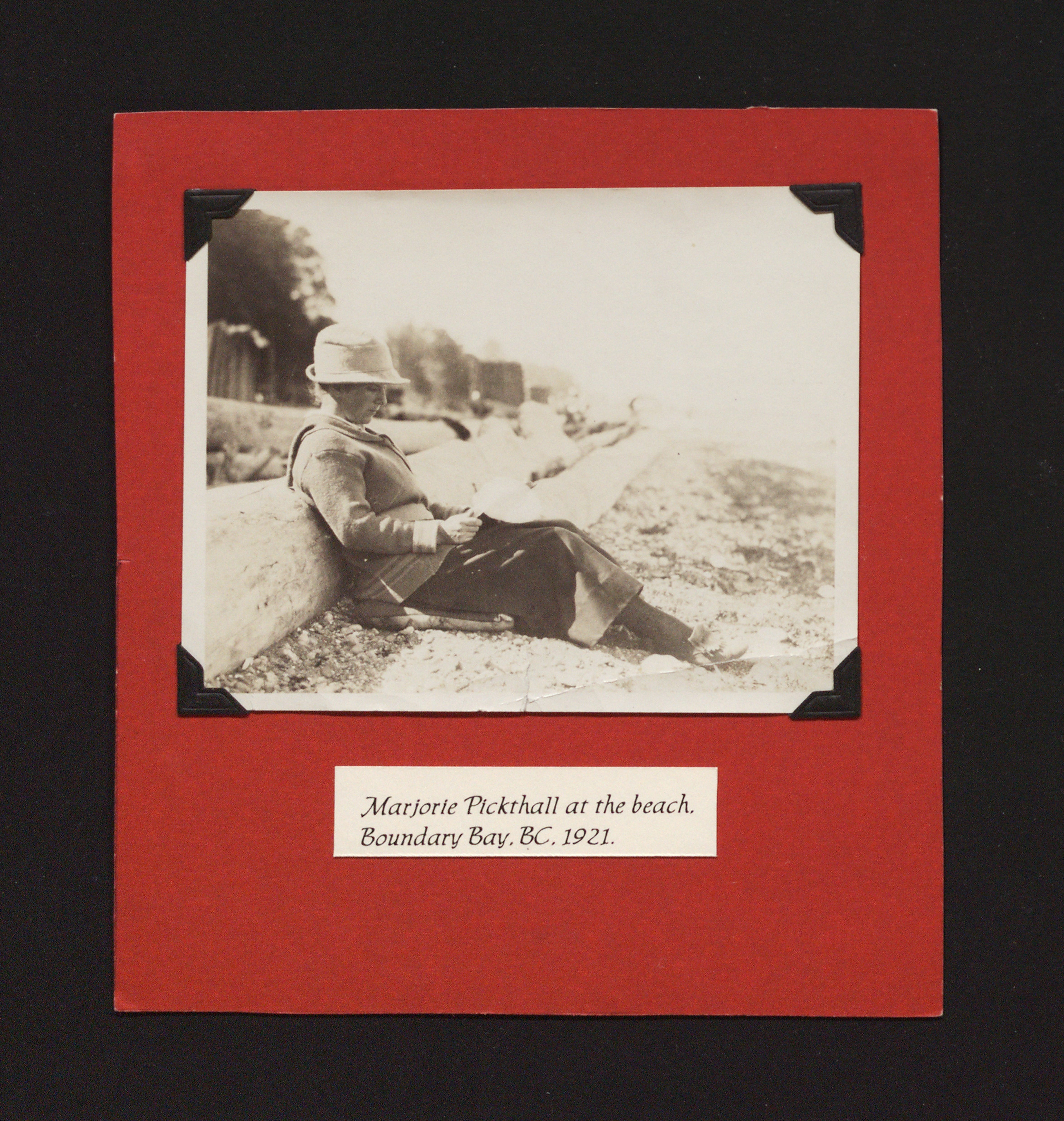
In addition to her adoption of new poetic influences, Pickthall’s later poetry reflects her increasingly direct contact with ordinary reality. Just prior to the First World War, she had moved to London in an effort to see the world and advance her writing career. When the war broke out, she more decisively put herself into the world in order to make a contribution to the cause. At first she trained to drive and repair vehicles, but when she failed to find a position as an ambulance or truck driver, she took up agriculture, and worked as a part-time secretary in agricultural administration and as a part-time gardener. Though she did not see combat, she was not unobservant of what was around her and this made it into poems such as “Marching Men,” written in a more direct style:
Under the level winter sky
I saw a thousand Christs go by.
They sang an idle song and free
As they went up to calvary.
Careless of eye and coarse of lip,
They marched in holiest fellowship.
That heaven might heal the world, they gave
Their earth-born dreams to deck the grave.
With souls unpurged and steadfast breath
They supped the sacrament of death.
And for each one, far off, apart,
Seven swords have rent a woman’s heart.
After the war, Pickthall’s later work also began to take in the lives of working people and the poor. The previously mentioned “Ebb Tide” is one example, but another is “The Tramper’s Grave”:
Perhaps his eyes in dream have seen
    Those low twin-hills that rise afar,
With soft blue breadth of sea between
    Reflecting one triumphant star.
Both “Ebb Tide” and “The Tramper’s Grave” show a turn towards Tennyson, with both particularly influenced by “Crossing the Bar.” However, we can also see the increasing influence of Wordsworth, with this passage from “The Tramper’s Grave” calling back particularly to “The Old Cumberland Beggar” and “My Heart Leaps Up”:
And he is one with leaf and blade,
    As changing seasons dawn again:
Kith to the far-flung clouds that fade,
    And brother to the silver rain.
Here, morn and eve, the blackbird sings,
    The strong-winged swallows wheel and dip;
And here all great and little things
    Go down the days in fellowship.
The turn towards grit and directness was never complete however. Shepherds also appear often in Pickthall’s work, but, even in the later poems, these tend to the more literary and more artificial side of the pastoral tradition, rather than the naturalistic, as in “The Singing Shepherd”:
O found you our belovéd ere the winds of morning found him
In the thickets by still waters where love is?
Did you know him from his fellows by the thorny bents that crowned him
Among the lily-gardens that are his?
O far away and far away from all the hidden meadows,
From the gardens where the year goes shod in gold,
I only heard a shepherd singing in the shadows
As he carried home the younglings to the fold.
What is still interesting about this poem, however, is how Pickthall folds both Psalm 23 and Song of Songs into the tradition. The poem tends to the hazy and atmospheric, and does not explicitly identify Jesus, the lover and the shepherd, but there is quite a suggestive mingling of the natural, the spiritual and the erotic nonetheless.
It is sad that Pickthall only lived until 38. Under the influence of Wordsworth, Tennyson, Christina Rossetti, and others, she was moving towards a more direct and, in my opinion, more powerful mode of expression. Though ultimately still a fairly minor poet, Pickthall has real charm and sometimes even real emotional depth. Unlike slightly earlier Canadian poets such as Archibald Lampman, who often reads simply like a mash up of poorly digested bits of Wordsworth and Keats, she is not derivative. Her decision to throw herself into the full breadth of the Victorian and Romantic tradition means that her can never be reduced to a copy of some narrow bit of it. She is a unique sensibility and worthy of finding readers, particularly those with any interest in the origins of Christian poetry in Canada.
Used copies of her 1936 Complete Poems (2nd Ed.) and the 1957 Selected Poems are available for purchase online. The Selected Poems is also easily available online here.
Burl Horniachek is a Canadian teacher, poet and translator, and the editor of To Heaven’s Rim, a major anthology of world Christian poetry. He was born in Saskatoon and grew up south of Edmonton. He studied Ancient Near Eastern Studies (Hebrew/Ancient Israel) at the University of Toronto and creative writing at the University of Alberta with Nobel Prize winner Derek Walcott. He currently lives near Winnipeg, with his wife, a surgeon, and their two kids.